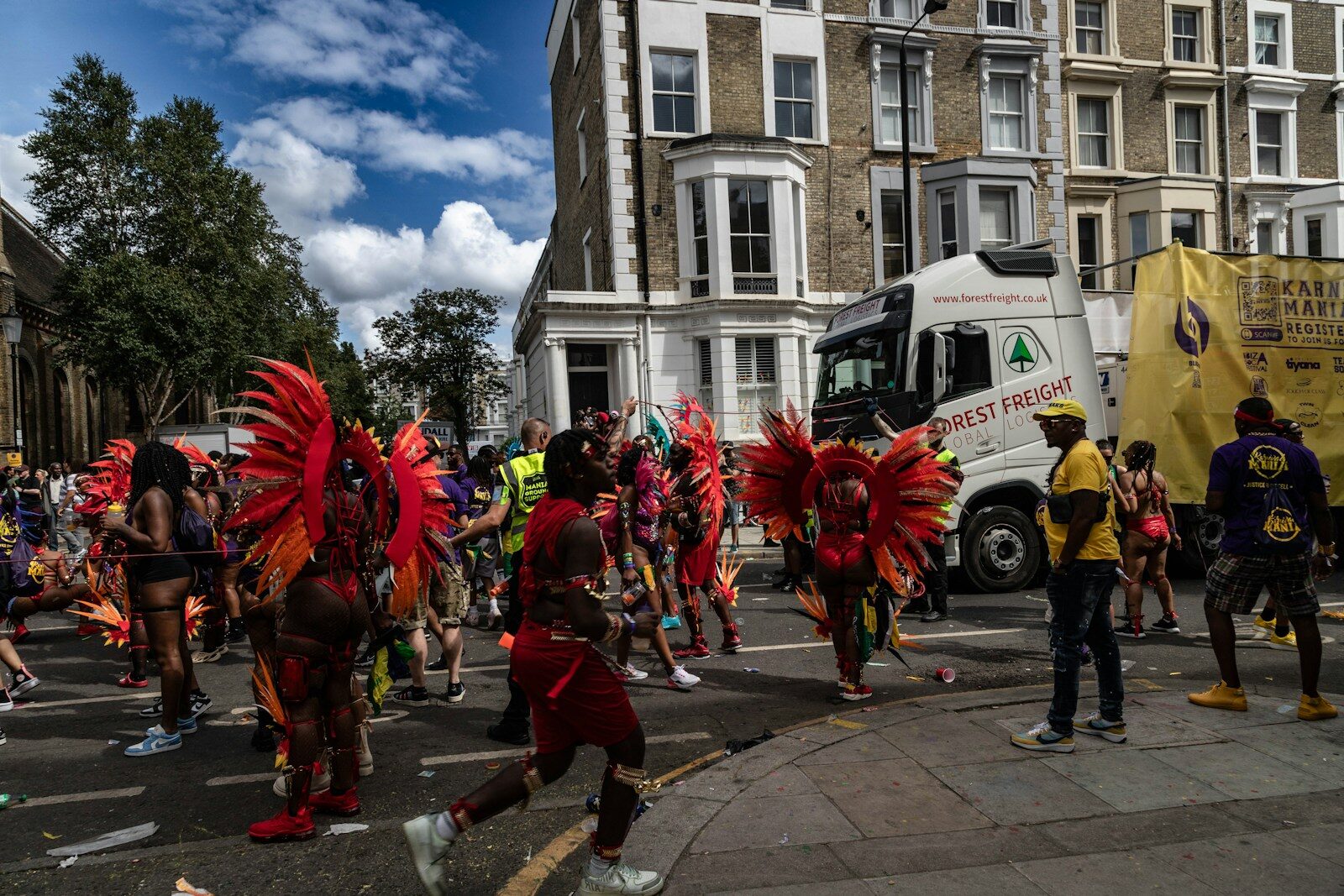
Every summer, the streets of west London burst into colour, music and movement as Notting Hill Carnival brings people together for one of the UK’s most recognisable cultural celebrations. With spectacular costumes, infectious rhythms and the irresistible smell of Caribbean street food, it’s an event that transforms an ordinary bank holiday weekend into something truly memorable.
More than just a lively street party, Notting Hill Carnival is a celebration of Caribbean heritage, creativity and community spirit. Its roots lie in the experiences of London’s Caribbean communities, who helped shape the capital’s cultural identity during the post-war years.
The Story Behind Notting Hill Carnival
The carnival’s origins can be traced back to the late 1950s and early 1960s, when events were organised to celebrate Caribbean culture and promote unity at a time of racial tension in London. Activist Claudia Jones played an important role in this history, organising an indoor Caribbean carnival in 1959 to celebrate West Indian culture and bring communities together.
The outdoor street carnival that developed in Notting Hill during the 1960s became a way for Caribbean traditions to flourish in London. Over the decades, it grew into a major annual event, attracting visitors from across the UK and beyond.
Today, the carnival remains a powerful expression of cultural pride, reflecting the influence of Caribbean communities on British music, food, fashion and everyday life.
Music, Costumes and a Feast for the Senses
One of the biggest attractions is the music. Steel bands, soca performers, reggae soundsystems and DJs create a soundtrack that carries through the streets, encouraging spectators to dance along with the crowds.
The costumes are equally impressive. Masquerade bands spend months preparing elaborate outfits featuring feathers, sequins, intricate designs and vibrant colours. For many participants, joining a band is about much more than dressing up; it’s an opportunity to celebrate heritage, creativity and belonging.
Food is another essential part of the experience. Visitors can sample Caribbean favourites such as jerk chicken, curried goat, rice and peas, fried plantain and traditional patties. The aromas drifting from the stalls are enough to tempt even those who arrived without an appetite.
Making the Most of Carnival
Planning ahead can make a significant difference, particularly for first-time visitors. The streets become extremely busy, so comfortable footwear, suitable clothing and plenty of water are sensible essentials. Checking the official event information before travelling is also worthwhile, as road closures, transport arrangements and access restrictions can change from year to year.
It’s important to remember that Notting Hill Carnival is a community celebration with a rich cultural history. Respecting the neighbourhood, following event guidance and looking out for fellow visitors all help preserve the atmosphere that makes it special.
A London Tradition That Continues to Inspire
Notting Hill Carnival has evolved considerably since its early beginnings, but its central message remains remarkably consistent: culture can bring people together. It offers a space for artistic expression, celebrates the contributions of Caribbean communities and gives London a chance to showcase its diversity on an extraordinary scale.
Whether you’re drawn by the music, the costumes, the food or the history, carnival offers a colourful reminder that some of the best experiences in life are those shared with others.
Photo by Bernd Dittrich.